 NL
NL EN
EN FR
FR ES
ES PTPT
PTPT
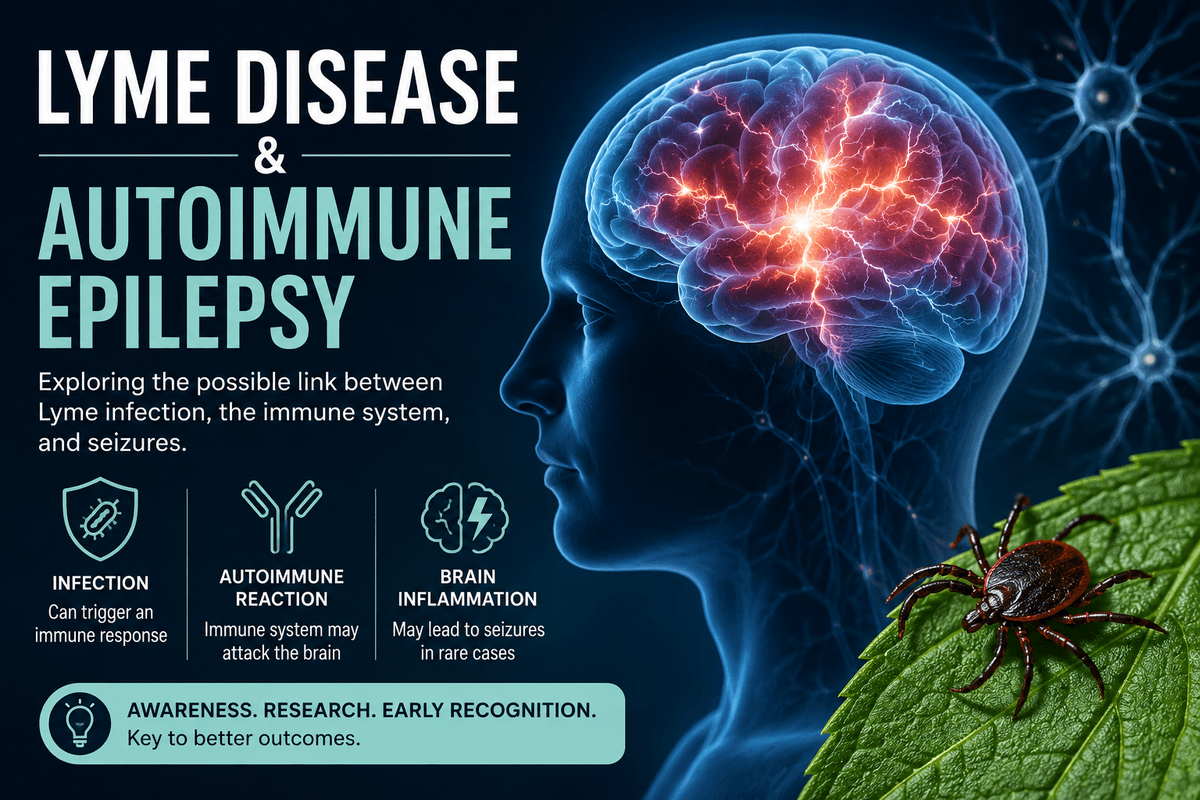
A recent medical case report, "Autoimmune Epilepsy Temporally Associated With Lyme Disease" (PMC / NIH), highlights two unusual patients who developed autoimmune epilepsy shortly after being diagnosed with Lyme disease. 🧠
The researchers suggest that, in rare situations, infection with Borrelia burgdorferi may trigger an abnormal immune response where the body mistakenly attacks healthy brain tissue involved in seizure regulation. This phenomenon, known as molecular mimicry, has already been linked to several autoimmune diseases.
🚨 Both patients experienced:
- New-onset seizures
- Cognitive and behavioral changes
- MRI and cerebrospinal fluid abnormalities
- Symptoms consistent with brain inflammation
- Improvement after receiving immunotherapy
One of the key messages from the article is that autoimmune epilepsy can be difficult to recognize because its symptoms may mimic infectious encephalitis, psychiatric disorders, or traditional epilepsy. As a result, some patients may initially receive only anti-infectious or anti-seizure treatment while the underlying immune process continues.
💡 The report emphasizes the importance of early neurological evaluation, brain imaging, EEG testing, and considering autoimmune causes when seizures do not respond as expected.
Another important observation is that the patients improved after immune-targeted therapies, suggesting that inflammation — not only infection itself — may play a central role in these cases.
Although the study describes only two patients, it contributes to growing evidence that infections can sometimes trigger autoimmune neurological disorders. The findings encourage further research into the complex relationship between infection, immunity, and brain health.


